Big Toe Arthritis & Hallux Rigidus Surgery in Council Bluffs, IA
Relief from Big Toe Joint Pain & Arthritis
Pain and stiffness in the big toe joint can make walking, standing, and even wearing shoes genuinely difficult. What might feel like a minor nuisance at first often becomes a more significant limitation over time, particularly if the underlying cause is hallux rigidus, a progressive form of arthritis that affects the joint at the base of the big toe. Getting an accurate diagnosis early makes a meaningful difference in how many treatment options are available.
At Council Bluffs Foot & Ankle Care, Dr. Patrick Barnes has extensive experience diagnosing and treating hallux rigidus and other forms of big toe arthritis. He tailors treatment to each patient's stage of the condition, starting with conservative measures and offering surgical correction for cases that require it.
If big toe pain is limiting your daily life, don't wait for it to get worse. Request an appointment with Dr. Barnes today.
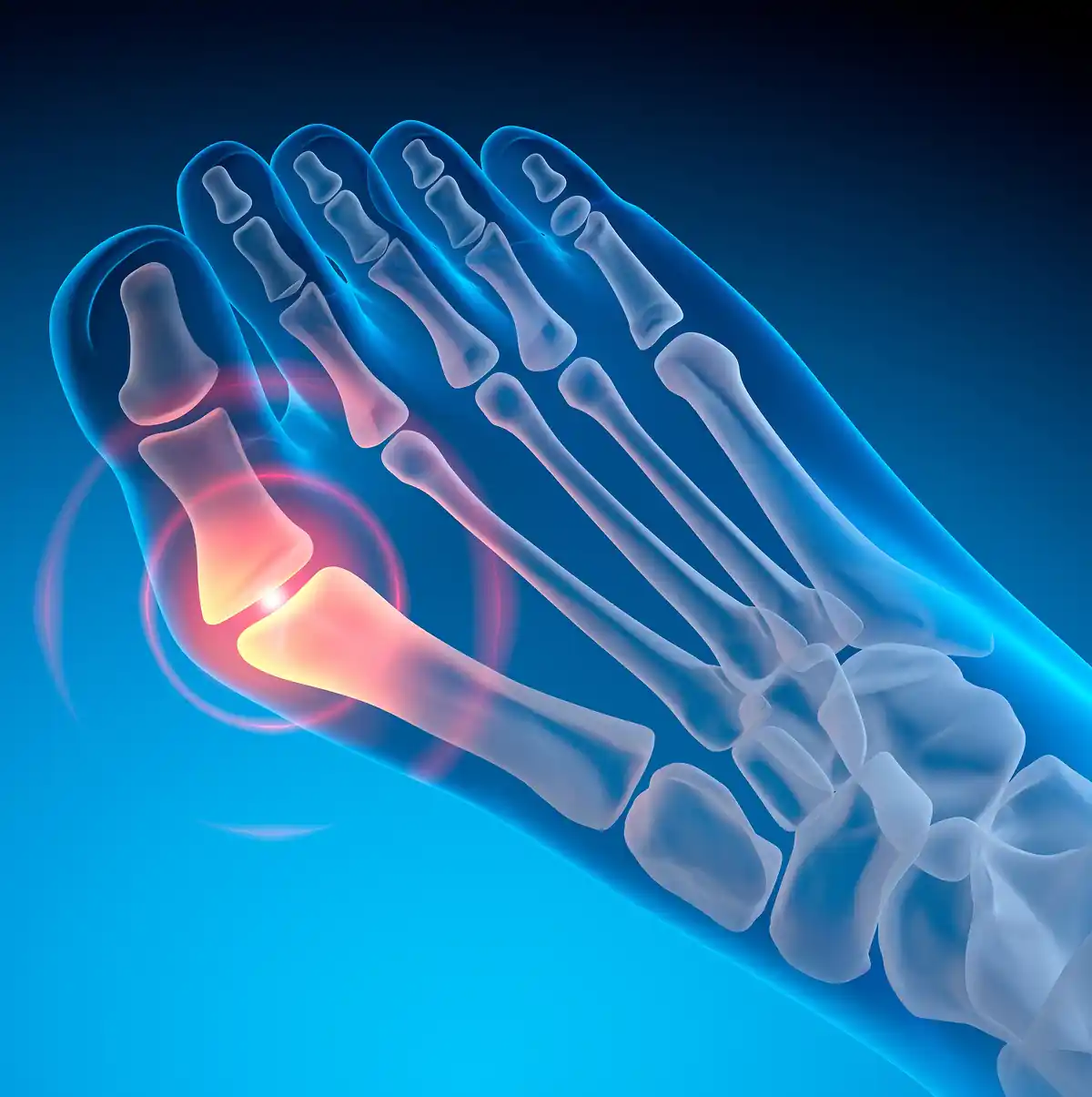
Understanding Hallux Rigidus & Arthritis of the Big Toe
What Is Arthritis of the Big Toe?
Arthritis of the big toe most commonly refers to hallux rigidus, a degenerative joint condition that affects the first metatarsophalangeal joint, or 1st MTPJ, which is the joint connecting the big toe to the foot. As the name suggests, hallux rigidus causes progressive stiffness and loss of motion in the joint alongside pain and swelling. It is the most common form of arthritis in the foot.
The condition develops in stages. In the early stages, motion is somewhat limited, and pain occurs mainly during activity. As it progresses, bone spurs form around the joint, the cartilage deteriorates further, and range of motion decreases significantly. In advanced cases, the joint may become almost completely rigid, making normal walking mechanics difficult to maintain.
Causes & Risk Factors
Hallux rigidus is most often caused by wear and tear on the cartilage of the big toe joint over time. Contributing factors include:
- A family history of the condition or an inherited foot structure that places abnormal stress on the joint
- Previous injury to the big toe, such as a sprain or fracture that damaged the cartilage
- Flat feet or low arches, which alter how force is distributed through the forefoot
- Occupations or activities that require repeated bending of the big toe
- Inflammatory arthritis conditions, such as gout or rheumatoid arthritis
Symptoms
Symptoms of hallux rigidus typically develop gradually and worsen over time. Common signs include:
- Pain and stiffness in the big toe joint, especially during push-off when walking
- Swelling and inflammation around the joint
- A bony bump or bone spur on the top of the joint, which can cause additional pain when pressing against footwear
- Difficulty bending the toe upward, particularly when climbing stairs or squatting
- Limping or altered gait as the body compensates for joint pain
- Aching in the joint, even at rest, in more advanced cases
Diagnosis
Dr. Barnes diagnoses hallux rigidus through a physical examination of the joint, assessing range of motion, identifying the location of pain, and evaluating any visible bone spurs. Digital X-rays are a key part of the diagnostic process, as they show the degree of joint space narrowing, cartilage loss, and bone spur formation, all of which help determine the stage of the condition and guide treatment recommendations.
Treatment Options Available at Our Council Bluffs Office
How Dr. Barnes Treats Arthritis of the Big Toe
Treatment for hallux rigidus is tailored to the severity of the condition. Dr. Barnes begins with conservative measures for earlier-stage cases and recommends surgical intervention when the joint has deteriorated to a point where non-surgical care is no longer effective.
Conservative Care Options
Conservative treatment focuses on reducing pain, managing inflammation, and slowing the progression of the condition:
- Footwear Modifications: Shoes with a stiff, rocker-bottom sole reduce the need to bend the big toe during walking, which can significantly decrease pain with each step. Avoiding flexible or thin-soled footwear is equally important.
- Orthotics: Orthotic devices prescribed by Dr. Barnes can limit motion at the big toe joint and offload pressure from the affected area, providing more consistent day-to-day relief than footwear changes alone.
- Anti-inflammatory Medications: Over-the-counter NSAIDs help manage pain and reduce swelling during flare-ups.
- Corticosteroid Injections: A precisely placed injection into the joint can provide meaningful short-term relief from pain and inflammation, particularly during periods of increased symptoms.
- Activity Modifications: Reducing activities that require significant push-off or toe bending can help manage symptoms without requiring surgical intervention.
Surgical Treatment: 1st MTPJ Arthrodesis
When conservative care is no longer controlling pain adequately, or when the joint has deteriorated to an advanced stage, surgical correction is typically the most reliable path to lasting relief. For hallux rigidus, the most definitive surgical option is a 1st MTPJ arthrodesis, a fusion of the first metatarsophalangeal joint.
During this procedure, Dr. Barnes removes the remaining articular cartilage from both sides of the joint, positions the big toe at the optimal functional angle, and fixates the first metatarsal head to the base of the proximal phalanx using a combination of a plate and screws. This type of rigid fixation stabilizes the joint completely, eliminates the source of arthritis pain, and allows for earlier weight-bearing compared to other fixation methods.
While fusion does eliminate motion at the joint, most patients find that the relief from pain far outweighs the loss of movement, particularly since the joint was already severely limited in motion before surgery. Many patients are surprised by how natural their gait feels after recovery.
The procedure typically takes approximately one hour. Patients are placed in a surgical boot following surgery and are able to bear weight with the boot during the recovery period. Sutures are generally removed at the two-week visit, and X-rays are taken at regular intervals to monitor bone healing. By weeks six to seven, Dr. Barnes assesses whether the patient can begin transitioning to a lace-up shoe. Most of the bone healing is complete by eight weeks, and patients gradually return to their regular activities from that point forward.
Frequently Asked Questions
What is hallux rigidus, and how is it different from a bunion?
Hallux rigidus and bunions are both conditions that affect the big toe joint, but they are different problems. A bunion involves a structural misalignment of the big toe, causing it to drift toward the other toes and creating a bony prominence on the inner side of the foot. Hallux rigidus is a degenerative arthritis condition that causes the cartilage in the big toe joint to wear down, leading to stiffness, bone spur formation, and progressive loss of motion. The two conditions can sometimes occur together, and Dr. Barnes will evaluate your foot thoroughly to identify exactly what's contributing to your pain.
Is big toe joint fusion a good long-term solution?
For patients with advanced hallux rigidus who have exhausted conservative options, 1st MTPJ arthrodesis is considered one of the most reliable and durable surgical solutions available. By eliminating the painful, deteriorated joint and fusing the bones in a functional position, the procedure provides lasting pain relief and restores the ability to walk comfortably. Most patients achieve good long-term outcomes and return to an active lifestyle after recovery. Dr. Barnes will review the procedure in detail and help you weigh the benefits and trade-offs before any decision is made.
Why does my big toe joint hurt more in the morning?
Morning stiffness and pain in the big toe joint are common symptoms of hallux rigidus and other forms of arthritis. When the joint is at rest overnight, inflammation tends to settle in, and the joint can stiffen noticeably. The pain often eases somewhat once you start moving and the joint warms up, though it may return after prolonged activity. If you're regularly noticing this pattern, it's a good indication that the joint should be evaluated. Earlier-stage hallux rigidus typically responds better to conservative treatment, so getting it assessed sooner rather than later works in your favor.
How do I schedule an appointment with a podiatrist near me?
Scheduling at Council Bluffs Foot & Ankle Care is simple and convenient. You can request an appointment online or call our office directly at (712) 328-0297. Our friendly team will help you find a time that works with your schedule.